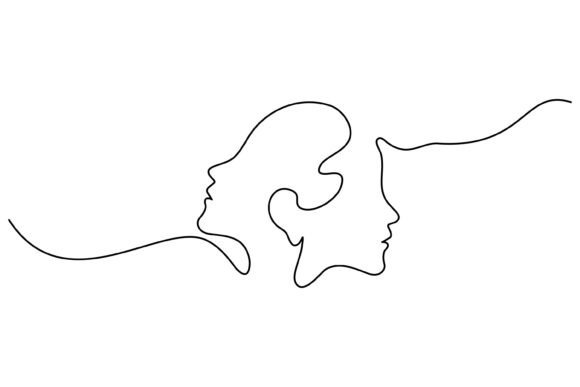
Continuous Line Design of Two People
The elegance of minimalism finds its purest expression in the Continuous Line Design of Two People. This artistic technique, where a single, unbroken stroke defines the contours and connection between two figures, captures emotion with striking simplicity. Whether depicting a tender embrace, a dynamic dance, or a moment of quiet conversation, this style strips away the unnecessary to reveal the essence of human interaction. For designers, artists, and content creators, understanding the nuances of this aesthetic is not just about appreciating art; it is about leveraging a versatile visual tool that communicates warmth, unity, and sophistication across various media.
The Essence of Single-Line Aesthetics
At its core, a continuous line drawing relies on the artist’s ability to plan a path that never lifts the pen from the paper. When applied to two people, the challenge and beauty lie in how the line transitions from one figure to the other. Does the line flow seamlessly from a shoulder to a hand? Does it loop back to define a shared space? The resulting image is often abstract yet instantly recognizable. This specific style, often seen as a continuous line design of two people dissent illustration or harmony, depends heavily on the curvature and weight of the line. On a white background, these single-line decorative elements stand out with high contrast, making them ideal for modern, clean layouts where whitespace is as important as the subject itself.
The versatility of this format means it can convey a wide range of narratives. A smooth, flowing line might suggest intimacy and peace, while jagged or intersecting paths could represent conflict or complex dynamics. This duality allows the same technical approach to serve vastly different emotional purposes, making it a powerful asset for storytellers and brand builders alike.
Why Different Audiences Value This Art Form
The appeal of continuous line art extends far beyond the gallery wall. Its utility varies significantly depending on who is using it and why. Understanding these perspectives helps in selecting the right assets for your specific projects.
For Branding Professionals and Entrepreneurs
Small business owners and marketers often seek visuals that are memorable yet scalable. A Continuous Line Design of Two People works exceptionally well for logos and brand marks. Because the design is simplified, it remains legible even when shrunk down for a favicon or embroidered on a small garment. Entrepreneurs in the wellness, counseling, or relationship coaching sectors frequently use these illustrations to symbolize partnership, support, and human connection without relying on clichéd imagery. The clean lines project professionalism and modernity, aligning well with contemporary brand identities that favor subtlety over loud graphics.
For Digital Creators and Bloggers
Content creators face the constant pressure to produce engaging visuals quickly. Using pre-made vector assets like SVGs and EPS files allows bloggers and social media managers to maintain a consistent aesthetic without hiring a custom illustrator for every post. These designs are particularly effective for header images, section dividers, or background elements in articles about relationships, mental health, or lifestyle topics. The neutral nature of the white background ensures that text overlays remain readable, solving a common design headache for non-designers.
For Educators and Publishers
Educators and textbook publishers value clarity. Continuous line drawings are excellent for illustrating concepts in psychology, sociology, or literature because they focus attention on the interaction rather than distracting details like clothing or facial features. This abstraction encourages viewers to project their own interpretations onto the scene, making it a useful tool for prompting discussion in classroom settings. Furthermore, the black-and-white nature of these prints makes them cost-effective for printing in educational materials where color budgets may be limited.
For Hobbyists and Home Decor Enthusiasts
On a personal level, many individuals are drawn to this art form for home decoration. The minimalist vibe fits perfectly with Scandinavian, Japandi, and modern interior design trends. Hobbyists who enjoy DIY projects often purchase these designs to create custom wall art, print them on tote bags, or use them as stencils for pottery. The emotional resonance of two figures connected by a single line makes these pieces popular gifts for anniversaries, weddings, or friendships, adding a personal touch to handmade presents.
Evaluating Quality and Usability
When sourcing or creating these designs, several factors determine their practical value. Not all continuous line drawings are created equal, and the intended use case should drive your evaluation criteria.
- File Format Flexibility: The availability of EPS, SVG, and JPG formats is crucial. Vector files (EPS and SVG) allow for infinite scaling without loss of quality, which is essential for large-format printing or precise logo usage. JPGs are suitable for quick web use but lack editability. Ensuring you have access to vector formats future-proofs your asset library.
- Line Weight and Consistency: A high-quality continuous line design maintains a consistent stroke width unless variation is used intentionally for artistic effect. Inconsistent lines can look amateurish and distract from the overall composition. Check that the line flows logically and does not appear cluttered or overly complex.
- Emotional Clarity: Does the posture of the two people clearly convey the intended emotion? Whether it is love, conflict, or companionship, the body language should be unmistakable. Ambiguity can be artistic, but for commercial or educational use, clarity is often preferred.
- Background Compatibility: While these designs are typically drawn on a white background, ensure that the vector files allow for easy background removal or color changes. This flexibility enables you to adapt the artwork to dark mode websites, colored brochures, or varied product surfaces.
Practical Applications Across Industries
To better understand how to integrate this art style into your workflow, consider these practical examples tailored to different goals.
Wedding Invitations: A couple planning a minimalist wedding might use a continuous line illustration of themselves on their save-the-date cards. The elegance of the single line mirrors the simplicity and focus of their ceremony. Using an SVG file allows them to resize the image perfectly for both the envelope seal and the main invitation card.
Therapy Practice Branding: A marriage counselor could use a continuous line design of two people dissent illustration to represent the journey from conflict to resolution. This visual metaphor can be powerful on a website landing page, signaling to potential clients that the practice understands the complexities of relationship dynamics. The abstract nature ensures it feels inclusive and professional rather than overly specific or clinical.
Fashion and Apparel: Independent clothing brands often screen-print these designs on t-shirts and hoodies. The simplicity of the black line on white fabric (or vice versa) reduces printing costs while maintaining a high-fashion aesthetic. Designers must ensure the line thickness is sufficient for screen printing to avoid breaking during the wash cycle.
Making the Right Choice for Your Project
Deciding whether a Continuous Line Design of Two People is right for your project involves balancing creativity with functionality. If your goal is to evoke emotion with minimal distraction, this style is an excellent choice. It bridges the gap between abstract art and representational imagery, offering enough detail to be understood but enough ambiguity to be intriguing.
For beginners, starting with pre-made vectors allows you to experiment with layout and composition without needing advanced drawing skills. You can focus on how the image interacts with typography and other design elements. For experienced designers, these assets serve as a foundation that can be modified, combined, or animated to create unique visual experiences.
Ultimately, the power of this design lies in its universality. Human connection is a theme that resonates across cultures and contexts. By utilizing single-line decorative elements, you tap into a visual language that is both timeless and trending. Whether you are building a brand, teaching a class, or decorating your home, the continuous line offers a refined, thoughtful way to illustrate the bonds that tie us together. Ensure you select high-quality files that offer the flexibility you need, and let the simplicity of the line do the heavy lifting in your visual communication.