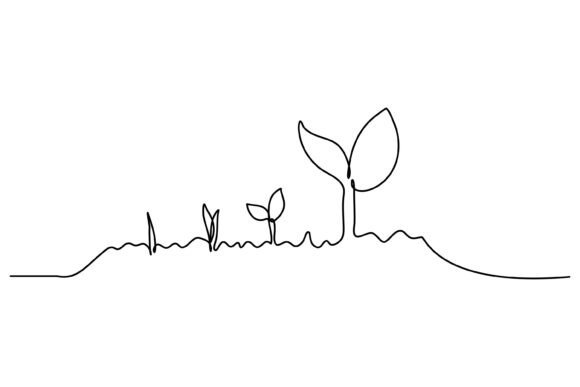
Continuous Line Design of Plant: Minimalist Aesthetics for Modern Visual Storytelling
In an era defined by digital noise and visual clutter, the Continuous Line Design of Plant offers a refreshing return to simplicity. This artistic technique, characterized by a single, unbroken stroke that forms complex botanical shapes, has transcended its origins in fine art to become a cornerstone of modern graphic design. Whether utilized for branding, interior decor, or educational materials, the elegance of a single line captures the essence of nature without the distraction of excessive detail. The appeal lies not just in the aesthetic minimalism, but in the technical precision required to execute it. When applied to specific biological processes, such as the continuous line design of illustration of plant reproduction, this style transforms complex scientific concepts into accessible, visually engaging narratives.
The demand for single line decorative elements drawn on a white background has surged among creators who value versatility and clarity. These assets are not merely decorative; they are functional tools that enhance communication across various media. For professionals ranging from marketers to educators, understanding the utility and application of these designs is essential for maintaining a contemporary and sophisticated visual identity.
The Evolution of Botanical Minimalism in Digital Media
The trajectory of botanical illustration has shifted dramatically over the past decade. Traditionally, botanical art was rooted in scientific accuracy, often featuring dense shading, multiple colors, and intricate details to catalog species precisely. However, the rise of digital platforms and mobile-first consumption has altered user expectations. Audiences now process information rapidly, favoring clean, scalable, and instantly recognizable imagery. This shift has propelled the Continuous Line Design of Plant into the spotlight.
This style aligns perfectly with the broader design trend of minimalism, which prioritizes negative space and essential forms. By reducing a plant to its fundamental contours, designers create images that are both timeless and modern. The evolution is also driven by technological advancements. Vector-based design software allows for the creation of precise, scalable lines that retain their quality at any size. This technical capability has made continuous line art a preferred choice for responsive web design, where images must adapt seamlessly from desktop monitors to smartphone screens.
Furthermore, the psychological impact of minimalist nature imagery cannot be overstated. In high-stress urban environments, simple botanical lines evoke a sense of calm and connection to the natural world. This emotional resonance makes the continuous line design of illustration of plant reproduction particularly effective in wellness, healthcare, and educational contexts, where clarity and tranquility are paramount.
Practical Applications for Creators and Businesses
For entrepreneurs, marketers, and content creators, the utility of single line decorative elements drawn on a white background extends far beyond aesthetic appeal. These assets serve as versatile building blocks for a wide range of projects. The clean, uncluttered nature of continuous line art ensures that it complements rather than competes with text and other design elements.
- Brand Identity: Companies in the organic, sustainable, and wellness sectors often adopt continuous line botanicals to convey purity and simplicity. A logo or brand mark derived from a single line suggests cohesion and integrity.
- Educational Materials: Educators and textbook publishers benefit from the clarity of line art. When illustrating complex biological processes, such as pollination or seed dispersal, a continuous line approach removes visual noise, allowing students to focus on the structural relationships between components.
- Digital Content: Bloggers and social media managers use these elements to break up text, create headers, or design infographics. The neutral tone of black lines on a white background ensures readability and professional presentation.
- Product Packaging: Minimalist packaging designs leverage these illustrations to stand out on crowded shelves. The sophistication of line art appeals to consumers seeking premium, eco-friendly products.
The adaptability of these designs is further enhanced by the file formats typically provided. When you acquire assets described as What you will get - EPS - SVG - JPG, you are gaining access to a comprehensive toolkit. Each format serves a distinct purpose in the modern workflow, ensuring that the design can be implemented effectively across print and digital channels.
Understanding File Formats: EPS, SVG, and JPG
To maximize the value of Continuous Line Design of Plant assets, it is crucial to understand the technical differences between the provided file formats. Choosing the right format for the right application prevents quality loss and ensures optimal performance.
SVG: Scalable Vector Graphics
SVG is the gold standard for web and digital interface design. As a vector format, it uses mathematical equations to define lines, meaning the image can be scaled infinitely without pixelation. For developers and web designers, SVG files are lightweight and can be manipulated via CSS, allowing for interactive effects such as color changes or animations on hover. This makes SVG ideal for responsive websites and mobile applications where load speed and visual fidelity are critical.
EPS: Encapsulated PostScript
EPS files are primarily used in professional printing and large-format production. Like SVG, EPS is a vector format, preserving the crispness of the single line decorative elements regardless of size. Printers prefer EPS because it is compatible with industry-standard software like Adobe Illustrator and InDesign. If you are designing business cards, brochures, or large wall murals featuring botanical line art, EPS ensures that the lines remain sharp and professional.
JPG: Joint Photographic Experts Group
While vector formats offer flexibility, JPGs provide immediate usability for non-designers. A JPG is a raster image, meaning it is composed of pixels. While it cannot be scaled up without losing quality, it is universally compatible with all devices and software. JPGs are perfect for quick integration into social media posts, email newsletters, or word processing documents where advanced editing is not required. The high contrast of black lines on a white background renders exceptionally well in JPG format, maintaining clarity even at lower resolutions.
The Role of Line Art in Illustrating Complex Biological Processes
One of the most compelling applications of this style is the continuous line design of illustration of plant reproduction. Botanical reproduction involves intricate structures—stamens, pistils, pollen grains, and ovules—that can appear chaotic when rendered realistically. Continuous line art simplifies these structures into their geometric essentials, highlighting the flow and connectivity of the reproductive process.
For example, an illustration depicting pollination might use a single flowing line to trace the path of a bee from the anther to the stigma, visually connecting the actor with the action. This narrative quality helps viewers understand the sequence of events intuitively. In academic and scientific communication, such clarity reduces cognitive load, allowing the audience to grasp complex mechanisms quickly. This approach reflects a broader trend in science communication: making specialized knowledge accessible through thoughtful design.
Moreover, the artistic interpretation of biological processes bridges the gap between science and art. It invites viewers to appreciate the beauty of natural mechanisms, fostering a deeper engagement with environmental topics. For NGOs and environmental advocates, using such illustrations in campaigns can evoke both intellectual understanding and emotional appreciation for plant life.
Integrating Single Line Elements into Modern Workflows
Adopting Continuous Line Design of Plant assets into your workflow requires a strategic approach. Here are practical recommendations for integrating these elements effectively:
- Maintain Consistency: When using multiple botanical illustrations, ensure they share the same line weight and style. Inconsistencies in thickness or curvature can disrupt visual harmony.
- Leverage Negative Space: The power of line art lies in what is not drawn. Allow ample white space around the elements to let them breathe. Overcrowding diminishes the minimalist impact.
- Customize with Color: While black on white is classic, vector formats like SVG and EPS allow for easy color customization. Align the line color with your brand palette to create a cohesive look.
- Combine with Typography: Pair continuous line botanicals with clean, sans-serif fonts to reinforce the modern aesthetic. Avoid ornate typefaces that may clash with the simplicity of the lines.
By treating these illustrations as functional design components rather than mere decorations, professionals can elevate their visual communication. The single line decorative elements drawn on a white background are not just trends; they are tools for clearer, more impactful storytelling in a visually saturated world.
Future-Proofing Your Visual Assets
As digital interfaces continue to evolve, the demand for scalable, lightweight, and aesthetically pleasing graphics will persist. The Continuous Line Design of Plant meets these criteria effectively. Its simplicity ensures longevity, avoiding the dated look that often plagues more trendy, complex styles. By investing in high-quality vector assets today, creators and businesses future-proof their visual libraries.
Whether you are designing a new brand identity, creating educational content, or enhancing your digital presence, the strategic use of continuous line botanicals offers a pathway to sophistication and clarity. The availability of multiple formats—EPS, SVG, and JPG—ensures that these assets can be deployed wherever needed, maintaining integrity across all platforms. In embracing this minimalist approach, we do not lose detail; rather, we gain focus, allowing the essential beauty of nature to shine through.