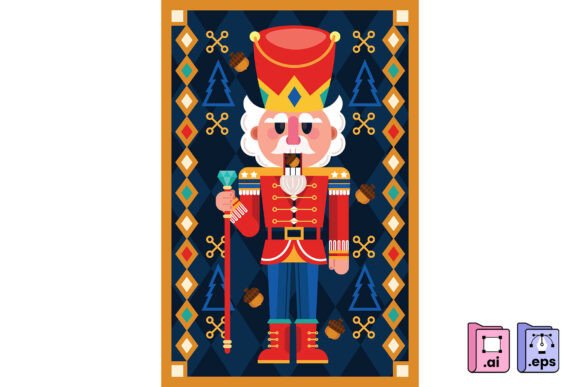
Classic Festive Nutcracker: A Guide to Flat-Style Holiday Illustrations
The holiday season is defined by visual traditions that evoke warmth, nostalgia, and celebration. Among the most enduring symbols of this period is the nutcracker soldier, a figure rooted in folklore and popularized globally through ballet and decorative arts. In the context of modern graphic design, the Classic Festive Nutcracker represents a specific aesthetic approach: a flat-style illustration that distills the complex details of traditional figurines into bold colors, clean geometric shapes, and accessible decorative elements. For designers, marketers, and content creators, understanding the utility and application of this asset type is essential for effective seasonal branding.
Understanding the Flat-Style Aesthetic
Flat design emerged as a dominant trend in digital interfaces and print media due to its clarity and scalability. When applied to traditional subjects like the nutcracker, this style removes three-dimensional shading, realistic textures, and intricate gradients. Instead, it relies on solid blocks of color and simplified forms to convey the subject’s identity. The Classic Festive Nutcracker illustration typically features the iconic tall hat, braided uniform, and stern yet cheerful expression, rendered with minimal lines and high-contrast palettes.
This approach offers several functional advantages. First, it ensures legibility across various sizes, from small social media icons to large-format posters. Second, the clean shapes integrate seamlessly with modern typography and layout grids, allowing for cohesive design systems. Unlike photorealistic images, which can clash with minimalist brand identities, flat illustrations provide a neutral yet festive backdrop that enhances rather than overwhelms surrounding content.
Practical Applications and Use Cases
The versatility of the Classic Festive Nutcracker makes it suitable for a wide range of projects. Evaluating where this asset fits best requires considering the medium and the audience’s expectations.
- Greeting Cards and Stationery: The bold colors and clear lines of flat illustrations print well on various paper stocks. They offer a contemporary twist on traditional holiday cards, appealing to recipients who appreciate modern design sensibilities.
- Digital Marketing and Social Media: File size and load times are critical for web performance. Vector-based flat illustrations, such as those provided in Adobe Illustrator formats, can be exported as lightweight SVGs or PNGs. This ensures fast loading on mobile devices while maintaining crisp edges on high-resolution screens.
- Packaging and Gift Wrap: Repeating patterns derived from flat nutcracker elements create visually engaging wrapping paper or product boxes. The simplicity of the shapes allows for seamless tiling without visible junctions or visual clutter.
- Corporate Branding: Businesses seeking to maintain a professional image during the holidays often avoid overly whimsical or chaotic imagery. A structured, flat-style nutcracker aligns with corporate aesthetics, offering festivity without sacrificing brand integrity.
Evaluating Technical Specifications and Compatibility
When selecting design assets, technical compatibility is a primary consideration. The source files for the Classic Festive Nutcracker are typically provided in Adobe Illustrator (AI) and Encapsulated PostScript (EPS) formats, compatible with CS6 and later versions. These vector formats are industry standards for scalable graphics.
Vector files allow designers to resize the illustration infinitely without loss of quality. This is crucial for projects requiring multiple output sizes, such as a logo variant for a website header and a large banner for a physical event. Additionally, vector layers enable easy customization. Designers can adjust color palettes to match specific brand guidelines, modify individual elements, or isolate parts of the illustration for composite designs. However, working with AI and EPS files requires proficiency in vector editing software. Users limited to raster-based programs like Photoshop may need to convert files, which can limit editability unless handled correctly.
Benefits and Tradeoffs
Choosing a flat-style illustration involves balancing aesthetic appeal with functional requirements. The primary benefit is adaptability. The Classic Festive Nutcracker can be integrated into diverse design contexts, from minimalist websites to colorful print ads. Its timeless appeal ensures it does not feel dated quickly, providing long-term value for reusable marketing materials.
However, there are tradeoffs. Flat design lacks the depth and emotional resonance of hand-painted or photorealistic illustrations. For brands relying on heritage, luxury, or artisanal narratives, a simplified graphic may appear too generic or commercial. Furthermore, because flat design is widespread, standing out requires careful attention to color selection and composition. Using standard reds and greens may result in a design that blends into the sea of holiday content, whereas unique color combinations can enhance distinctiveness.
When to Consider Alternatives
While the Classic Festive Nutcracker is a strong choice for many applications, it may not suit every project. Alternatives should be considered in the following scenarios:
- High-End Luxury Branding: If the goal is to convey exclusivity and craftsmanship, detailed illustrations with gold foil effects, watercolor textures, or photographic elements may better align with brand values.
- Nostalgic or Vintage Campaigns: Brands leveraging mid-century or Victorian aesthetics might find flat design too modern. In such cases, retro-style illustrations with grain textures and muted palettes could be more appropriate.
- Children’s Educational Materials: While flat design is clear, younger audiences sometimes respond better to characters with expressive faces and dynamic poses. More illustrative, character-driven styles might engage children more effectively than static, geometric representations.
Decision-Making Insights for Designers
To determine whether the Classic Festive Nutcracker aligns with your goals, consider the following questions:
- What is the primary medium? If the design will be viewed primarily on screens or printed in standard formats, flat vector art is highly efficient. For large-scale fine art prints, consider resolution and texture requirements.
- Who is the target audience? Modern, urban, and tech-savvy demographics often appreciate clean, minimalist design. Traditionalist or older audiences might prefer more classic, detailed imagery.
- What is the timeline? Vector assets are quick to customize and deploy. If time is limited, using a pre-made flat illustration accelerates the design process compared to commissioning original artwork.
- Does it fit the brand voice? Ensure the boldness and simplicity of the flat style complement your existing visual identity. It should feel like a natural extension of your brand, not an disjointed addition.
In conclusion, the Classic Festive Nutcracker flat-style illustration offers a practical, versatile solution for holiday design needs. Its clean shapes and bold colors provide a modern interpretation of a timeless symbol, suitable for a wide array of applications from digital marketing to print collateral. By understanding its technical specifications, aesthetic implications, and appropriate use cases, designers and marketers can make informed decisions that enhance their festive campaigns while maintaining brand consistency. Whether used as a central focal point or a subtle decorative element, this asset serves as a reliable tool for capturing the spirit of the season in a contemporary format.