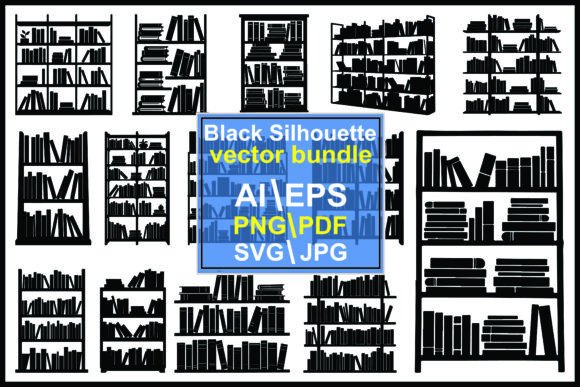
Silhouette Bookshelves Filled with Books: A Practical Guide to Graphic Design Assets for Interiors and Illustrations
In the realm of graphic design, interior visualization, and digital illustration, the representation of knowledge and storage often hinges on subtle visual cues. Silhouette Bookshelves Filled with Books represent a distinct category of design elements that bridge the gap between literal representation and abstract symbolism. These assets are not merely decorative; they serve as powerful tools for conveying themes of education, literature, and organized information without the visual clutter of detailed textures or specific titles.
For designers, architects, and content creators, understanding the utility of these black silhouette vectors is essential. Unlike photorealistic images, silhouettes offer a clean, modern aesthetic that integrates seamlessly into various layouts. This article explores the specific advantages of using silhouette bookshelf collections, compares them to alternative design approaches, and provides practical guidance on file formats and implementation.
Understanding the Distinct Value of Silhouette Designs
A silhouette is defined by its outline and solid fill, typically in black, against a contrasting background. When applied to bookshelves, this style strips away the noise of individual book spines, colors, and lighting reflections. The result is a graphic design element that communicates the concept of a library or study area instantly.
The primary distinction of Silhouette Bookshelves Filled with Books lies in their versatility. Because they lack specific details, they do not date quickly. A photorealistic image of a bookshelf might reveal outdated book covers or specific decor trends, whereas a silhouette remains timeless. This makes them ideal for projects requiring a simple, clean, and modern look. Whether used in a corporate brochure about education or a website header for a literary blog, the silhouette focuses the viewer’s attention on the structure and the volume of the collection rather than the specifics of the items stored.
Key Characteristics of High-Quality Silhouette Bundles
When evaluating a collection of black silhouette bookshelves, several factors determine its usefulness:
- Variety of Shapes: A robust bundle includes different sizes and arrangements, such as vertical tall units, horizontal low consoles, and corner sections.
- Arrangement Diversity: Look for sets that show books stacked vertically, horizontally, and in mixed orientations to mimic real-life usage.
- Open vs. Closed Structures: Some designs may include cabinet doors or open shelving, providing flexibility for different interior design contexts.
- Scalability: Vector-based silhouettes allow for infinite resizing without loss of quality, crucial for both web icons and large-format prints.
Comparing Silhouettes to Other Design Approaches
Choosing the right visual asset depends heavily on the project’s goals. Here is how silhouette bookshelves compare to other common styles:
Silhouettes vs. Photorealistic Images
Photorealistic images provide depth, texture, and color. They are ideal when the specific atmosphere of a room is the focal point. However, they can be visually heavy and may clash with minimalist web designs. Silhouette Bookshelves Filled with Books offer a lightweight alternative. They reduce cognitive load for the viewer, making them better suited for backgrounds, icons, or informational graphics where the text is the primary focus.
Silhouettes vs. Line Art
Line art uses strokes to define shapes, offering a delicate and airy feel. While elegant, line art can sometimes get lost against busy backgrounds or fail to convey mass. Silhouettes, being solid black shapes, provide strong visual weight. They are more effective when you need to establish a clear boundary or create a bold contrast in a layout. For instance, in a graphic illustration about the "weight of knowledge," a solid silhouette conveys substance better than thin lines.
Silhouettes vs. 3D Models
3D models offer interactivity and perspective changes but require significant rendering time and technical expertise. For static designs, such as print media or standard web pages, 3D is often overkill. Silhouette vectors are immediate, easy to edit, and universally compatible, making them a more efficient choice for most two-dimensional design tasks.
Technical Considerations: File Formats and Usability
The utility of any design asset is dictated by its file formats. A comprehensive silhouette vector bundle should offer multiple options to ensure compatibility across different software and use cases. Understanding these formats helps users make informed decisions about which files to extract and use.
Typically, a high-quality bundle includes a compressed zip file containing five primary types of formats. Users need to extract these files using tools like WinZip, WinRAR, or the built-in extraction features of modern operating systems.
Vector Formats: AI, EPS, and SVG
Vector files are the gold standard for professional design work because they are resolution-independent.
- AI (Adobe Illustrator): Ideal for designers using Adobe Creative Cloud. These files allow for easy editing of nodes, colors, and shapes.
- EPS (Encapsulated PostScript): A universal vector format compatible with most professional design software, including CorelDRAW and Inkscape. It is excellent for print production.
- SVG (Scalable Vector Graphics): The preferred format for web development. SVGs are code-based, allowing for CSS styling and animation, making them perfect for responsive websites and apps.
Raster Formats: JPG and PNG
Raster files are pixel-based and best for quick implementations where editing is not required.
- PNG (Portable Network Graphics): Supports transparency, which is crucial for overlaying silhouettes onto colored backgrounds or images without a white box around them.
- JPG (Joint Photographic Experts Group): Suitable for simple previews or documents where file size is a concern and transparency is not needed. However, JPGs do not support transparent backgrounds, limiting their flexibility in layered designs.
The Role of PDF
PDF files in design bundles often serve as preview documents or printable vector sources. They can be opened in many viewers and sometimes edited in vector software, providing a convenient middle ground for users who may not have specialized design tools.
Best-Fit Situations for Using Silhouette Bookshelves
Knowing when to use Silhouette Bookshelves Filled with Books can significantly enhance the effectiveness of a design project. These assets are particularly well-suited for:
- Educational and Academic Materials: Textbooks, course catalogs, and university brochures benefit from the scholarly association of bookshelves without the distraction of specific titles.
- Interior Design Presentations: Architects and designers use silhouettes to indicate furniture placement in floor plans or elevation drawings where precise detail is secondary to spatial arrangement.
- Web and App Interfaces: Icons and headers for e-learning platforms, digital libraries, and bookstore websites utilize these graphics for quick recognition and fast loading times.
- Branding and Logos: Companies in the publishing, education, or consulting sectors often incorporate bookshelf silhouettes into their logos to symbolize knowledge and structure.
Limitations and When to Choose Alternatives
While versatile, silhouettes are not a universal solution. Their lack of detail can be a limitation when the specific identity of the books or the material of the shelf is important. For example, a historical novel cover might require a period-accurate, detailed illustration of a library rather than a generic silhouette. Similarly, if the goal is to evoke warmth and coziness, the stark contrast of black and white silhouettes might feel too cold or corporate. In such cases, warm-toned illustrations or photography may be more appropriate.
Additionally, users must ensure they have the right software to handle vector files. If a user only has basic image viewing capabilities, they should rely on the included JPG or PNG files, though they will lose the ability to scale the image infinitely without pixelation.
Making an Informed Decision
Selecting the right design resources involves balancing aesthetic goals with technical requirements. Silhouette Bookshelves Filled with Books offer a compelling blend of simplicity, symbolism, and flexibility. They are particularly valuable for professionals who need to communicate concepts of storage, knowledge, and organization efficiently.
When evaluating a bundle, consider the diversity of the shapes included, the range of file formats provided, and the licensing terms for commercial use. A well-curated set allows for seamless integration into both print and digital media, ensuring that the design remains crisp and professional regardless of the output size. By understanding the strengths and tradeoffs of silhouette graphics, designers and creators can make more strategic choices that enhance their visual communication without unnecessary complexity.