The Art of the Dot: Mastering Circular Dotted Halftone Patterns in Modern Design
In the vast landscape of graphic design, few elements bridge the gap between retro nostalgia and contemporary minimalism as effectively as the circular dotted halftone pattern. What began as a technical necessity in print media has evolved into a powerful aesthetic tool, defining the visual language of modern branding, web interfaces, and decorative art. For designers, marketers, and creative enthusiasts, understanding how to leverage these patterns is no longer just about replicating a vintage look; it is about mastering texture, depth, and visual rhythm in a digital-first world.
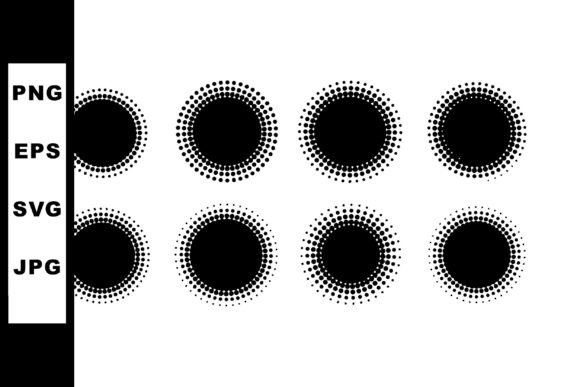
This article explores the significance of circular dotted halftones, their practical applications, and why having access to versatile vector illustrations in formats like SVG, EPS, JPG, and PNG is essential for any serious creative workflow.
From Print Limitations to Digital Freedom
To truly appreciate the circular dotted halftone, one must understand its origins. Historically, halftoning was a photographic process used to simulate continuous tone imagery through the use of dots, varying either in size or in spacing. In black and white newspaper printing, for instance, printers could not produce shades of gray. Instead, they used clusters of black ink dots. When viewed from a distance, the human eye blends these dots together, creating the illusion of shading and gradient.
Today, we are no longer bound by the limitations of ink and newsprint. However, the aesthetic appeal of the halftone remains potent. The circular arrangement of these dots adds a layer of geometric sophistication that linear or random scatter patterns often lack. It creates a focal point, drawing the viewer’s eye toward the center while fading out into the background. This transition from dense to sparse creates a sense of movement and dynamism, making it an ideal choice for backgrounds that need to be interesting without being overwhelming.
Why the "Circular" Variation Matters
While standard halftones are often rectangular or grid-based, the circular dotted pattern offers unique compositional benefits.
- Focal Point Creation: The radial nature of the circle naturally guides attention to the center, making it perfect for highlighting logos, product shots, or key text.
- Soft Edges: Unlike square patterns that can feel rigid or boxy, circular patterns offer organic, soft edges that blend seamlessly into white space or other design elements.
- Versatility: These patterns can function as standalone decorative elements, subtle background textures, or complex overlays for photo manipulation.
The Power of Black and White Minimalism
In an era of colorful, high-saturation digital noise, black and white design stands out for its clarity and elegance. A monochromatic circular halftone pattern strips away distraction, allowing the form and texture to take center stage. This high-contrast style is not merely a stylistic choice; it is a functional one.
Black and white graphics ensure maximum readability and compatibility across various mediums. Whether printed on a business card, displayed on a mobile screen, or projected on a large billboard, the contrast remains sharp. Furthermore, this neutral palette allows designers to overlay colored text or images without clashing, providing a flexible foundation for broader creative projects. The modern mood achieved through this simplicity speaks to a sophisticated audience that values clean lines and intentional design over clutter.
Practical Applications in Modern Creativity
Understanding the theory is important, but knowing how to apply these assets is where the real value lies. Here is how circular dotted halftones are transforming various sectors of the creative industry:
- Brand Identity and Packaging: Brands seeking a retro-modern vibe often use halftones on packaging to create tactile visual interest. The dot pattern can mimic the texture of fabric or perforated materials, adding perceived value to physical products.
- Web and UI Design: In user interface design, heavy images can slow down load times. Using lightweight SVG halftone patterns as section dividers or hero background elements adds visual depth without sacrificing performance. The scalable nature of vectors ensures they look crisp on retina displays.
- Social Media Graphics: Content creators use these patterns to frame quotes or product announcements. The circular shape acts as a natural vignette, focusing the viewer’s attention on the central message while maintaining a stylish, curated aesthetic.
- Editorial and Print Layouts: Magazines and zines utilize halftones to break up large blocks of text or to add artistic flair to portrait photography. The black and white style integrates seamlessly with typography, enhancing the overall editorial flow.
The Importance of File Formats: SVG, EPS, JPG, and PNG
When downloading creative assets, the file format is just as critical as the design itself. A comprehensive ZIP package containing SVG, EPS, JPG, and PNG files ensures that you are prepared for any project requirement. Here is why each format is indispensable:
SVG (Scalable Vector Graphics): This is the gold standard for web and digital design. SVGs are code-based, meaning they can be scaled to any size without losing quality. They are also incredibly small in file size, which is crucial for website speed optimization. You can even manipulate the color of the dots directly via CSS if needed.
EPS (Encapsulated PostScript): For professional print work, EPS is essential. It is a vector format compatible with industry-standard software like Adobe Illustrator and CorelDRAW. If you need to send your design to a professional printer for large-format posters or banners, the EPS file ensures that every dot remains sharp and defined, regardless of the output size.
PNG (Portable Network Graphics): PNGs support transparency, which is vital for layering. If you want to place a circular halftone over a photograph or a colored background, a PNG allows the dots to sit cleanly on top without a white box surrounding them. This makes it ideal for quick compositing in tools like Photoshop or Canva.
JPG (Joint Photographic Experts Group): While less flexible than vectors, JPGs are universally compatible. They are useful for quick previews, social media uploads where vector support is limited, or for incorporating the pattern into presentations and documents where editing is not required.
Common Misunderstandings About Halftones
Despite their popularity, there are misconceptions about using halftone patterns. One common assumption is that they are strictly "retro" and therefore unsuitable for futuristic or corporate designs. This is incorrect. When used with precise geometry and clean spacing, circular halftones feel distinctly modern and tech-forward. They are frequently seen in fintech apps, architectural firms, and modern fashion labels.
Another misunderstanding is that halftones are difficult to customize. With vector files, however, you have complete control. You can change the density of the dots, alter the spacing, recolor them, or crop them to fit specific shapes. The key is to view the halftone not as a static image, but as a flexible design component.
Building a Broader Design Vocabulary
Incorporating circular dotted halftone patterns into your work is more than just following a trend; it is about expanding your visual vocabulary. It teaches you how to manage negative space, how to guide the viewer’s eye, and how to create texture without clutter. By mastering these elements, you elevate your designs from simple compositions to engaging visual experiences.
Whether you are a seasoned graphic designer looking to refresh your asset library or a beginner eager to understand the mechanics of effective layout, these patterns offer a timeless solution. The combination of historical resonance and modern versatility makes them a staple in contemporary creative practice.
Getting Started with Your Download
Ready to integrate this aesthetic into your next project? Ensure you choose a high-quality resource. Look for a downloadable ZIP that provides true vector scalability alongside raster convenience. By having access to SVG, EPS, JPG, and PNG files, you empower yourself to work across platforms—from the web to print—without compromise. Embrace the dot, respect the space, and let the circular rhythm of your design speak volumes.